
The part of the morning I used to walk right through
For a long time, the morning was something I moved through on the way to the coffee maker. Kettle on, dogs up, back door open, everyone outside, back inside, bowls down. I was not watching. I was executing.
Walter makes it easy not to watch. He wakes up already in motion — tail going, nose to the floor, angling toward the counter where the treat jar lives. He has been that way since he arrived, and he is still that way now. Nothing to read there.
Mabel wakes up differently. She sleeps in front of the back door, and the getting-up process has always been slower for her. I used to call it her personality and leave it at that.
What I do not do anymore is leave it at that.
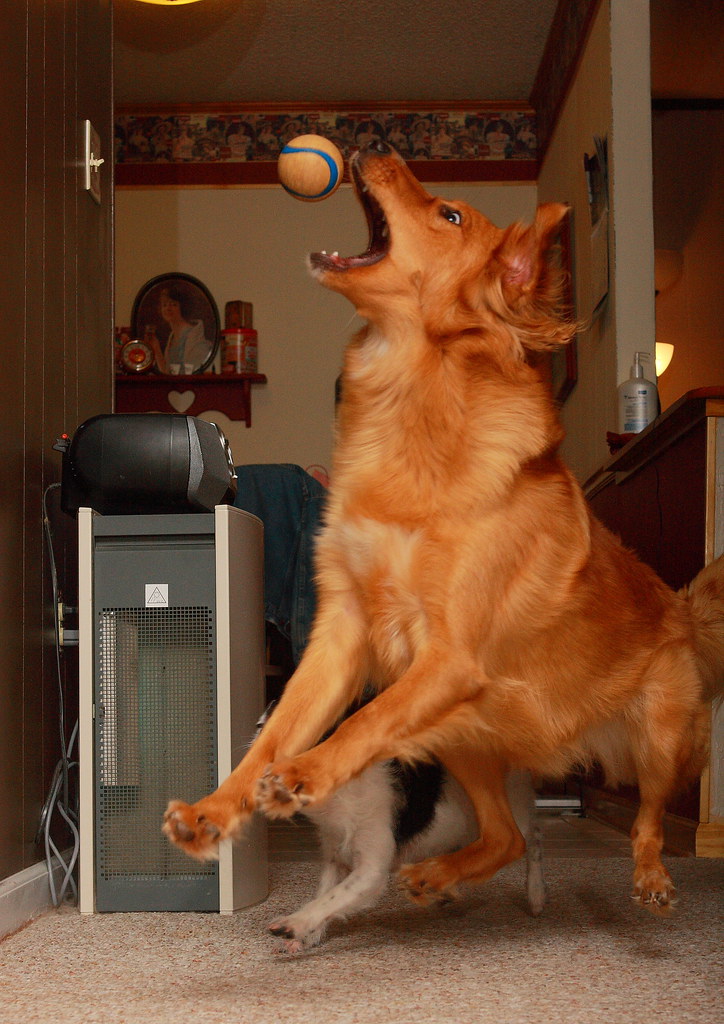
What the first hour actually shows me now
So I started watching that window on purpose, and what I track is not complicated. I keep my notebook on the counter corner near the coffee maker, and I write down four things:
- how long before she orients toward the kitchen
- whether she moves to the bowl on the mat with any intention, or drifts past it
- the quality of the greeting — eyes up, tail, acknowledgment — versus a blank pass-through
- how long before she seems to know where she is
Walter is my baseline. He wakes up already hungry, already aimed at the bowl, already himself. Pickle, the foster cocker spaniel, takes a few minutes but follows the room logically — sniffs the mat, finds the bowl, checks the back door. New place, reasonable confusion, then resolution.
Mabel is different now. Three weeks ago I timed a full four minutes between her lifting her head off the rug runner and her finding the bowl she has eaten from for four years. I had tried moving the bowl closer to where she sleeps, thinking proximity would help. It was worse — she stood in the middle of the kitchen looking at the wrong corner entirely.
That was the micro-surprise. I expected proximity to be the fix. What actually helped was putting the bowl back exactly where it has always been and waiting.
The first hour is not a test. It is the quietest, most readable window I have found.
What I kept calling tiredness
For a long time I called it age. Mabel would lift her head from the rug runner, blink at the back door, and then set her head back down for another few minutes, and I would think: she is older now, she moves slower, this is what older looks like. I tried getting her up earlier, thinking she needed more time before the day asked anything of her. It did not help. She was not more alert at six than at seven. She was just awake in a darker kitchen.
What made the misread visible was the notebook. That Tuesday morning last spring when I sat down and read three weeks of entries in a row, the word "slow" appeared so many times it stopped looking like description and started looking like data. Slow to stand. Slow to locate the bowl. Slow to find me in the hallway. It was not tiredness I had been recording. It was reorientation — the small, daily work of a dog rebuilding her map of the room from scratch. Not fatigue. A different thing entirely.
What the research says about morning orientation and social greeting
I want to be clear that I am not diagnosing anything at the leash hook. Last spring I tried greeting Mabel more loudly, thinking the extra animation would pull her in. It did not. She moved away from it. The micro-surprise was that a quieter, slower approach — crouching down near the dog bowl and waiting — got more response than anything I had tried before. I am only observing. But the research gave me a sharper vocabulary for what I was already watching.
The ordinary mornings
Some mornings the first hour is quiet in the best way — Mabel moves to her bowl, Pickle settles near the back door, Walter does his slow circuit of the kitchen counter hoping someone left something within reach. Nothing to write in the notebook. Nothing to flag.
Those are the mornings I am working toward. Not a perfect score on some invisible checklist, but a morning readable enough that I can set my coffee down and stop watching quite so hard.
The boring ones are the good ones.