

What I used to miss about the quiet
I once assumed that a sleeping dog was just a dog who did not need anything from me for a few hours. I would walk past the ceramic dog-bone jar by the coffee maker, hear the heavy silence of the house, and think of it as a simple pause. I did not realize then that sleep is a complex, fragile state that changes as they age.
Mabel’s favorite spot by the back door is where I first started to notice the shifts. Sometimes she is there in a deep, twitching rest, and other times she is awake but waiting, staring at the screen door with a stillness that feels different from the naps I saw when she was younger. Walter usually stays on the braided rug near the radiator, his breathing rhythmic and predictable, which makes the moments when Mabel seems to struggle with her own rest much more obvious to me.
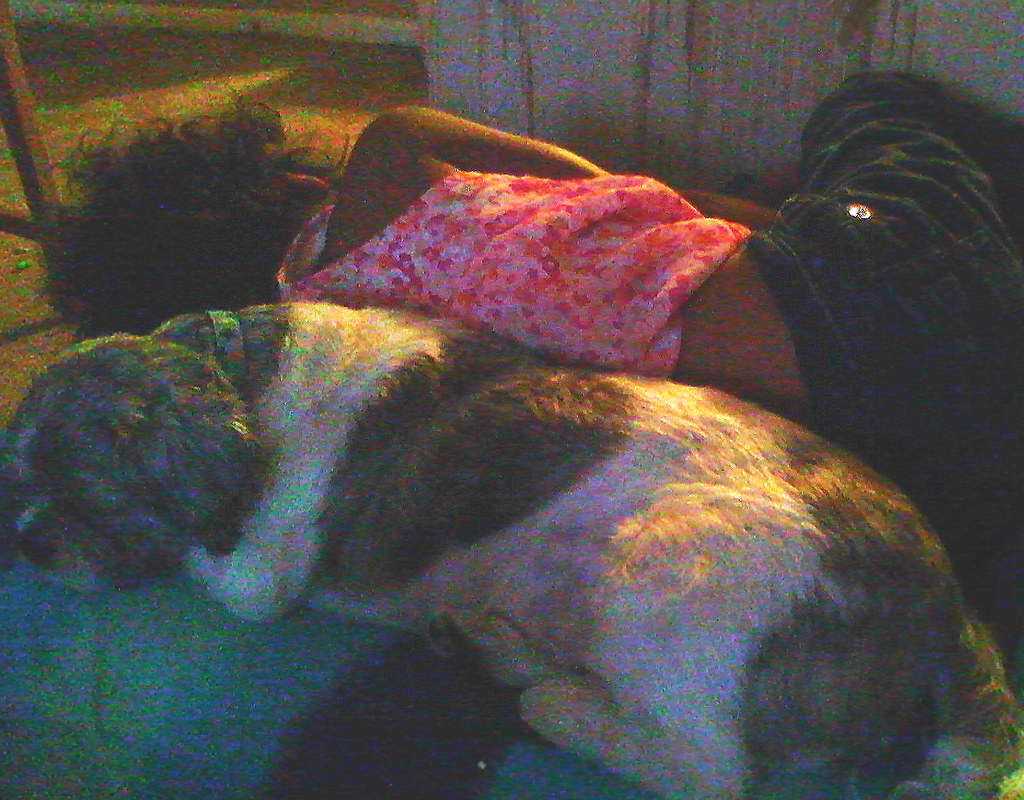

Pickle, the senior cocker spaniel currently living with us, has his own routine that involves pacing the hallway before he finally decides the floor near my reading chair is acceptable. These variations in how they settle are not just random habits. They are indicators of how their brains are processing the end of a day. I used to see a nap as a boring gap in the schedule, but now I see it as a piece of architecture that I am responsible for protecting. I watch their eyelids and the way they shift their weight, wondering what it is they are trying to reach when they finally find that deep, steady sleep.
Why sleep is not just the absence of movement
I used to think that a sleeping dog was a dog who was simply resting, but I have learned that the quality of that rest matters as much as the duration. Three weeks ago, I tried to force a change in the house by moving the bed near the radiator to make it warmer, thinking the heat would help Pickle settle faster. That did not work at all. Instead of sleeping soundly, he spent the evening pacing the hallway and stopping to stare at the wall. The micro-surprise was that he actually slept better once I moved him back to the cooler spot near the rug runner in the hallway, where the air flow is steady and the floor is firm.
When I watch Mabel now, I look for the difference between a dog who is recharging and a dog who is merely dozing in a state of low-level agitation. I keep my notebook on the kitchen counter to track these shifts. If she is twitching or waking up at the sound of the refrigerator cycling on, that is not the same as a deep, restorative nap. I want her to have the kind of sleep that allows her brain to quiet down, and that requires me to be the one who manages the environment.
The research I keep coming back to
I used to assume that if my senior was resting, his brain was resting too. I thought a quiet house and a soft rug runner by the back door would be enough to reset his internal rhythm. Three weeks ago, I tried leaving the kitchen lamp on all night to help him navigate, but it only made him pace more in the hallway. I expected the light to provide comfort, but the micro-surprise was that the extra visual input seemed to keep his mind stuck in a loop of trying to interpret shadows.
My foster, Pickle, a senior cocker spaniel, showed me how much this matters. He arrived with a habit of circling his water bowl for twenty minutes before he could settle. I tried moving his bed to the pantry corner to block the noise, but he grew more anxious. What actually helped was a boring, consistent dark-out period that did not rely on me trying to fix his brain, but rather on me providing a physical space that did not ask him to process anything at all. It is not that I can change the biology of his sleep, but I can change the architecture of the room where he sleeps. That distinction helps me keep my frustration in check when the nights are long.
How I shift the environment in my own house
Three weeks ago, I tried to force a stricter schedule on the household to see if it helped with the pacing I noticed at night. I moved the water bowl into the hallway and shut the kitchen door, thinking that a smaller space would encourage everyone to settle. It was a failure. The change only made Mabel pace more, her nails clicking against the hardwood floor because she could not find her usual path to the back door. I expected her to be restless; I did not expect her to become so distressed by the absence of her familiar route.
What actually helped was much simpler and required no movement of furniture at all. I started paying attention to the quality of light in the evening. I now dim the lamp by my reading chair as soon as the sun dips below the fence line. I leave one soft, amber glow in the corner of the room instead of the overhead light. It sounds minor, but the shift in the room changed how the dogs carry themselves. Walter and Pickle now drift toward their beds earlier, and Mabel seems to find her way to her rug runner with much less hesitation.
I do not need to rearrange the house to make it more readable for them. I just need to remove the visual noise that confuses them when they are already tired. It is a quiet adjustment, but it makes the transition into the night feel much more ordinary.
Holding the middle ground
I look at the ceramic dog-bone jar by the coffee maker and remember how much I used to fear the quiet. I thought a sleeping dog was a dog who was simply resting, but now I see the architecture of that rest as a vital, shifting space. When I sit in my reading chair and watch Mabel or Pickle drift into those deeper cycles, I no longer feel the need to rush in or demand a response. I keep my own movements soft and my voice low.
The goal is not to fix the biology of aging, but to provide a house that feels safe enough to inhabit during those long, drifting hours. It is a quieter way of living, and it feels more respectful to the dogs who have given me their best years. It is just an ordinary, readable life.
Why I stopped treating sleep as a side topic
Once I began keeping notes, I noticed how much the next day borrowed from the night before. A restless evening did not always stay in the evening. It showed up as slower orientation at breakfast, more pacing the next night, and a dog who looked like she was carrying static around with her. That was enough to make me take sleep much more seriously.
Sleep support in my house became very unsexy very quickly. Earlier dinner. Lights lowered gradually instead of all at once. Less visitor energy late in the day. A short predictable last outing. No sudden "let us do one more thing" after the dog had already started settling. Those small shifts improved the feel of the whole night.
I also got more honest about my own habits. If I was clattering around the kitchen late, leaving the television too bright, or creating a slightly chaotic bedtime atmosphere, my dog was often the one paying for it. Older dogs can be surprisingly sensitive to the emotional and sensory sloppiness of a household.
I also could not unsee the bidirectional part once I learned it. Sleep can get worse because the brain is struggling, and worse sleep can then make the brain’s job harder. Once I understood that loop, bedtime stopped being an afterthought in my house.
The pieces that helped most
- keep bedtime cues in the same order every night
- make the last outing gentle, not stimulating
- leave one soft lamp on if darkness seems disorienting
- write down bad nights so they stop pretending to be random
Bad sleep does not cause every issue, but it can definitely make existing issues louder. That alone makes it worth more attention than most of us give it the first time around.
What a good night buys us the next day
The morning after a good night tends to look simpler in my house. Meals go more smoothly. Hallway movement looks more direct. There is less standing and staring, less low-level static in her body, less of that feeling that the day is asking her to do math she did not study for.
That is why I do not frame sleep as pampering anymore. It is functional support. It protects the next day’s orientation, patience, and resilience. Once I understood that, I stopped treating bedtime as a soft optional wellness ritual and started treating it like infrastructure.
If you are trying to improve one thing without overhauling everything, bedtime is a very sensible place to start.