

I often stand by the coffee maker in the early morning, staring at the ceramic dog-bone jar on the counter while I try to sort out what I see in my house. My foster, Pickle, has been struggling with his movement lately. I watch the way Pickle stands at the back door, his head held slightly low, his tail perfectly still. It is a posture that suggests he has forgotten why he walked across the room, or perhaps it suggests his hips are aching from the dampness outside. I cannot always tell which one it is.

When Mabel starts to pace on the rug runner in the hallway, I find myself checking for the same ambiguity. She might be looking for a comfortable position because her legs are tired, or she might be caught in a loop of confusion that has nothing to do with her joints. I have spent years learning that these two states of being, pain and disorientation, are rarely separate in my senior dogs. They move together, weaving a pattern that makes the daily routine of my house feel much more complex than it looks on the surface. I do not have an answer for why they blur, but I do have a notebook that tracks the way they behave together.
Why I stopped looking for one answer
I used to be convinced that every behavior had a single, identifiable source. Last autumn, when Pickle began pacing the hallway near the coat closet at three in the morning, I decided it was strictly cognitive decline. I bought a new nightlight and moved his water bowl to the center of the kitchen floor, thinking that a different layout would stop the aimless walking. It did not help at all. In fact, he seemed more agitated by the change, bumping into the coffee maker in the dark because he could not find his usual path. My notebook on the kitchen counter stayed full of entries about his confusion, but those notes did not lead to any real improvement.
I had missed the micro-surprise that occurred that Tuesday morning. I went to help him up from his bed by the radiator, and he flinched before I even touched his shoulder. It was not disorientation that had him pacing; it was an ache in his joints that made settling down impossible. I felt foolish for assuming the behavior was purely mental when the physical reality was right there in front of me. The pacing was not a failure of his memory, but a reaction to his body. I now keep my notebook on the kitchen counter to record both the physical stiffness and the moments of mental fog, because I see now that they often walk through the door together. I stopped looking for one tidy answer because my house is far too full of complicated, overlapping patterns to ever be that simple.
What I watch for in the evening
Last Tuesday evening, the light in the kitchen turned that specific shade of gray that makes the edges of the room feel fuzzy. I watched Mabel stand on the rug runner in the hallway, staring at the closed pantry door. At first, I assumed she was confused, her mind drifting into that quiet, circular fog of cognitive decline. I tried calling her name to redirect her, but she did not turn. When I walked over to guide her toward the living room, I noticed her back legs were trembling just a fraction. It was not a mental lapse. She was standing there because her hips were aching and she did not know how to reposition herself without pain.
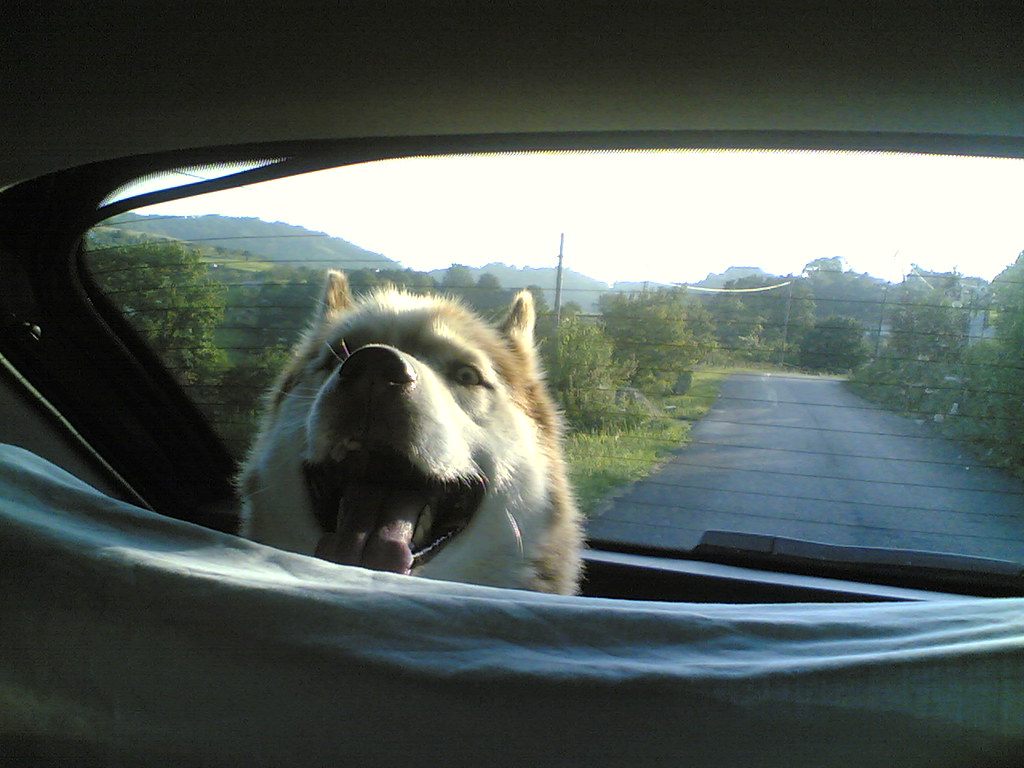
I thought moving her bed closer to the radiator would fix the restlessness, but it actually made her pacing worse because the floor was too slick for her to stand up easily. That was a micro-surprise to me. I expected her to settle because she was warm, yet she remained standing because she could not find a stable surface. Now, I watch the lamp by my reading chair as my primary gauge. If Walter is snoring and Pickle is tucked into a ball, but Mabel is hovering near the edge of the light, I look at her movement first. Does she look lost, or does she look like a dog trying to find a position that does not pull at her joints.
I keep my notebook on the small table next to the lamp by my reading chair, and I write down these moments of hesitation. When she pauses, I check the floor. If her paws are splayed on the rug runner, it is almost always a physical signal. If she is staring into a corner where nothing is happening, that is the other side of the coin. I do not try to separate them anymore. I just observe the stack.
Keeping the house readable
Last Tuesday morning, I tried moving the water bowl to the center of the kitchen floor because I thought it would help Mabel find it faster. I expected her to navigate around it, but she just stood by the empty mat near the pantry and stared at the wall for five minutes. It was a micro-surprise to see her so stuck, especially when the water was only three feet away. I realized then that I was trying to solve a cognitive problem with a physical layout change, when the real issue was the way she felt in her hips that day.
Walter, meanwhile, was napping on the rug runner by the back door, completely unbothered by the confusion. He is my baseline, the dog who moves through the house with a clear, rhythmic gait that tells me exactly where he is and what he wants. Watching him, I am reminded that my goal is not to fix every hesitation, but to make the house readable enough that Mabel does not have to work so hard to be comfortable. I do not need a perfect diagnosis to know when she needs a softer surface or a different path. I just need to keep my eyes on the floor and my notebook open by the coffee maker.
A quieter way to observe
I do not think a home observer needs to become a diagnostician. I do think we can become more respectful of context. When I sit in my reading chair with my notebook, I see how often the physical and the cognitive bleed into one another. It is not a puzzle to solve in an afternoon. It is a slow, shifting pattern that requires me to keep the hallway lights bright and the rug runner clear. Watching the way Mabel or Pickle moves toward the back door is enough for now. The ordinary, quiet observation is sufficient.